How to Quiet Your Inner Editor and Actually Finish a First Draft
It’s 9:40pm, you’ve been “writing” for forty minutes, and the document has one sentence in it — the same sentence, really, just rewritten six different ways, because none of them sounded quite right the first time. You backspace through the sixth version and start a seventh. This isn’t a motivation problem. It’s your inner editor showing up roughly four hundred words too early, and it will happily do this every night until you give it a different job to do.
Drafting and editing are not the same task
Your brain genuinely switches modes between generating an idea and judging it, and those two modes are bad roommates. The generative mode wants to keep moving, following one half-formed thought into the next. The editing mode wants precision — the right word, the right rhythm, a sentence that could survive being read aloud. Run both at once, on the same sentence, in real time, and the editing mode wins almost every round, because judging something that already exists is easier than making something exist in the first place. The result is a first sentence polished past the point of use and a word count that hasn’t moved. The fix isn’t trying harder to silence the inner editor mid-sentence. It’s refusing to let it anywhere near the page until the draft is actually a draft.
Give yourself permission to write badly, on purpose
This is the whole idea behind freewriting, and it works better than it sounds: set a timer for ten minutes, pick a thread, and keep your hands moving for the entire time no matter how bad the sentence in front of you is. No backspace, no rereading the last line, no fixing a typo you just noticed. If you run out of things to say, write “I don’t know what to write” until the next thought arrives — it almost always arrives within a sentence or two. The point isn’t that everything you produce this way is usable. Most of it isn’t. The point is that your inner editor can’t object to a sentence it never got the chance to review, and a messy paragraph that exists beats a perfect one that’s still six rewrites from finished.
Make the “no backspace” rule easier to actually keep
Willpower is a bad long-term plan here, the same way it’s a bad plan for most writing habits — the fix is removing the temptation rather than resisting it fresh every night. Hide the parts of the interface that invite a second look: no visible edit history, no toolbar suggesting you stop and format something, nothing to highlight and reconsider. A genuine full-screen writing mode does this by removing everything except the cursor, which makes rereading the last line take actual effort instead of a glance.
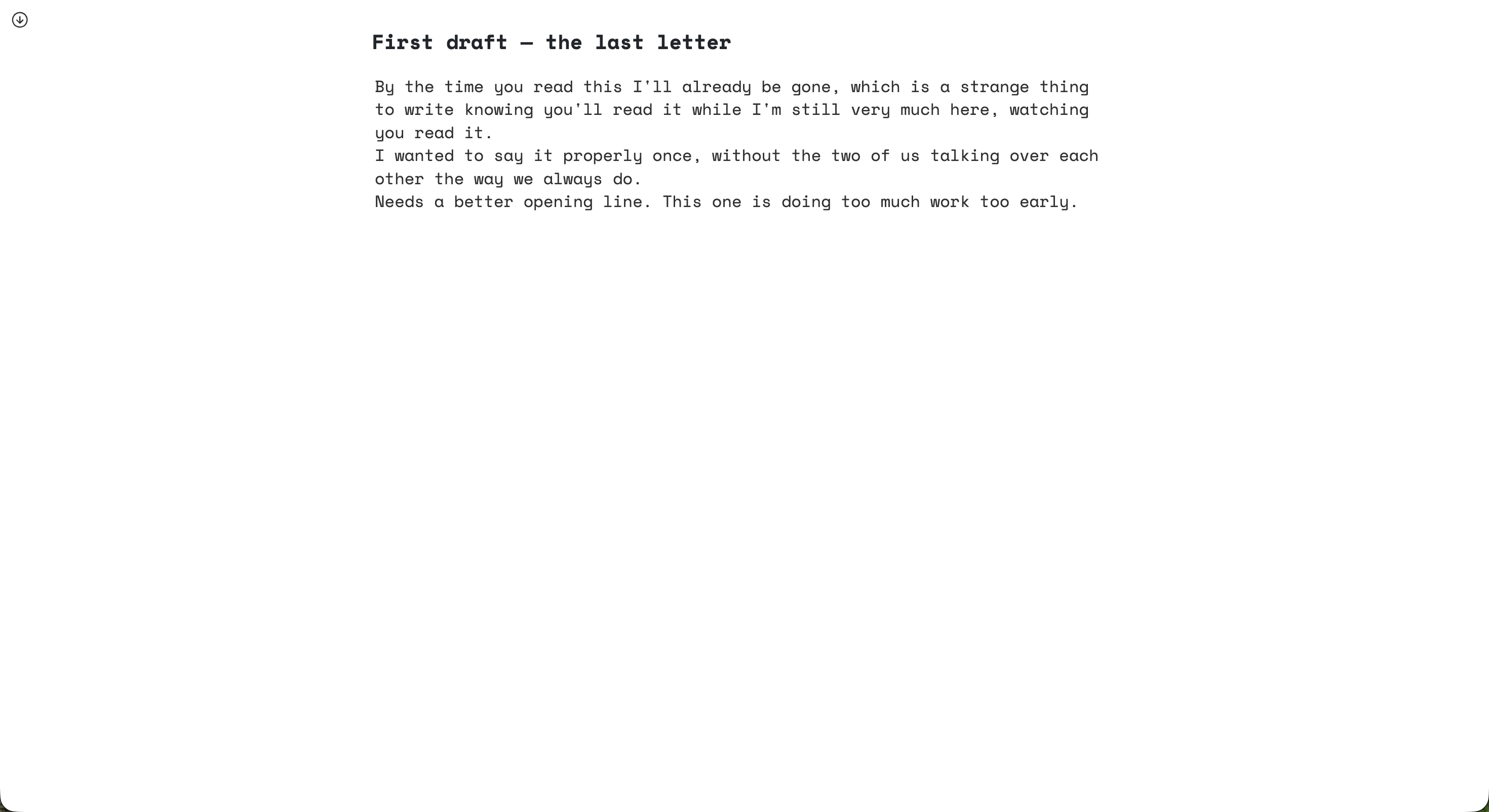
That’s most of what Typewriter Note’s focus mode is trying to do — not stop you from backspacing (it still has backspace, this isn’t a real typewriter), just remove the sidebar, the formatting options, and anything else your eye could land on instead of the next word. It won’t enforce the no-editing rule for you the way an actual deadline or a writing partner might, and if you’re the type who needs a hard lock to stay honest, a stricter freewriting app that disables backspace entirely will do more of that work than this one will.
Let the editor back in on its own shift
None of this makes editing unnecessary — it just moves it to a separate pass, later, when the job is actually judging a draft instead of preventing one from existing. Finish the ugly version first, close the document, and come back to it the next day with the editor mode fully switched on: cut the weak sentences, fix the typos, rewrite the opening you were agonizing over at 9:40pm, which usually turns out to need way less work than it felt like in the moment. Doing it in that order, instead of simultaneously, is most of the trick.
The only way to tell if any of this actually changes your Tuesday-night sessions is to try it on one. Open a blank page and give yourself ten minutes with no backspace before you let yourself reread a word of it. If the harder part for you is less about editing too early and more about showing up at all, the piece on building a daily writing habit that survives a bad week is the better next read.